The first time I set foot in Tokyo Disneyland, I actually ended up at DisneySea. I was baffled not to recognize a single ride from Disneyland Paris — it took me a while to realize these were actually two separate parks, and that most visitors pick one or the other rather than both.
You'd be right to wonder what a Disney park is doing on a site devoted to discovering Japan. It's not as beside the point as it sounds. Tokyo Disneyland isn't just an imported franchise — and that detail changes a lot, starting with the park's own identity, its exclusive attractions, and a service culture all its own.
The numbers back it up: Tokyo Disneyland alone still ranked among the four most-visited theme parks in the world in 2024, with a little over 15 million visitors. Japanese visitors also spend notably at the shops: about ¥5,000 per visitor on average on merchandise alone. That got me curious enough to actually run the numbers for a family of four: entrance tickets, meals, a few souvenirs, and the trip out to Maihama. The total? It climbs to around ¥80,000 for a single day — and that's before you add Premier Access or a bit of extra shopping.
Two separate parks, then — DisneySea, unique in the world (no other Disney Resort has an equivalent), and Disneyland, closer in spirit to its Western cousins but with its own exclusive attractions.
Second thing that struck me: how spotless the place is. We're in Japan, so that might sound almost expected — but I remembered a distinctly less pristine Disneyland Paris at the time (things may well have changed since).
Last thing: an impressive share of visitors wear Disney outfits, hats or accessories — a detail that, on its own, completely changes the overall mood of the park.
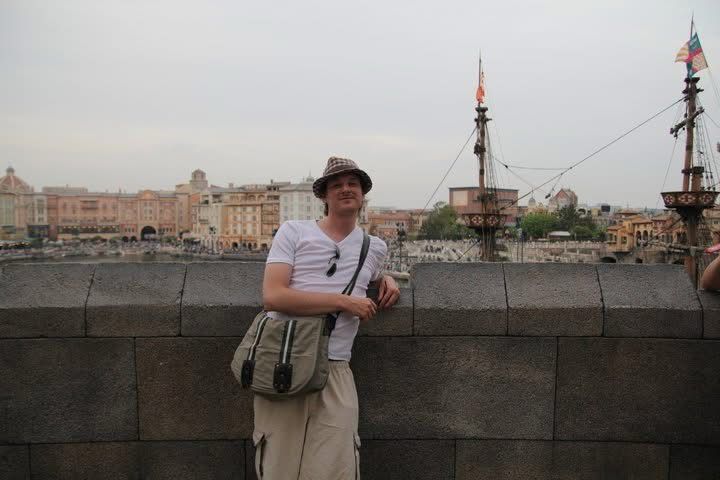
A funny coincidence for me: I was born the same year the park opened, in '83, so I've watched a few of its anniversaries go by right alongside my own. That same year also marked the very first Disney park to open outside the United States. Unlike future Disney parks abroad, Disney doesn't actually own Tokyo Disneyland: Oriental Land Company takes on the financial risk, paying Disney for its intellectual property and know-how. Then something interesting happens — the park becomes massive in Japan. Oriental Land eventually creates DisneySea with Disney: not a copy of an existing American park, but one designed and built specifically for Tokyo.
Tokyo Disney Resort is a unique case among Disney resorts: its parks are owned and operated by Oriental Land Company, a Japanese company, under license from Disney.
What's always struck me most is how much Japan made this world its own rather than simply importing it wholesale. Just look around the park: the share of visitors in Disney outfits, hats or accessories goes well beyond what you'd typically see at other Disney parks around the world. Friends, couples, sometimes entire families coordinate their outfits around a single character. Merchandise takes center stage, with seasonal products and menus exclusive to each time of year, often sold out within hours. And it's not just kids taking part: adults, alone or with colleagues, throw themselves fully into it, without a hint of self-consciousness. Over the decades, Disney seems to have slipped into some very Japanese habits — a taste for kawaii, for collectibles, for outings with friends or a partner built around a shared theme — more than it ever imposed its own.
The best symbol of that relationship is probably DisneySea, already mentioned above: Tokyo Disney Resort didn't stop at importing Disneyland, it also built its own park, unique in the world. Looking back, my confusion on that first visit was maybe fairly telling. I'd come looking for the Disneyland I already knew; what I'd actually stumbled onto was something Japan had made entirely its own.
A Few Practical Tips
- For a quick pizza, head to Captain Hook's Galley in Fantasyland — their bacon-pineapple pizza, tasting surprisingly close to a Hawaiian pizza, has become a cult favorite among regulars
- For a proper sit-down meal, Ristorante di Canaletto at DisneySea remains the go-to — the seafood pizza gets singled out often, with a canal-view terrace if you're lucky. Very popular: book ahead if you can via Priority Seating — reservations open a month in advance. A few same-day slots can sometimes still turn up
- Blue Bayou Restaurant, which looks directly onto Pirates of the Caribbean, is also worth it just for its nighttime old-bayou atmosphere
- The parade is a must — don't skip it
- To save money without cutting your evening short, go for the reduced-rate tickets valid later in the day — the After 5 Passport (entry from 5pm on weekdays) or the After 3 Passport (entry from 3pm on weekends and holidays). Enough to catch the evening parade and squeeze in a few rides at a lower cost — check current pricing before booking, it changes regularly
- The Halloween season is especially worth it for the atmosphere and costumed crowds — the weather is generally nicer than peak summer, too — but the windows when full costumes are allowed vary year to year, so check the current rules
- Avoid weekends if you can — they tend to be packed, and you'll get more out of the rides on a quieter day
- Budget generously — you'll almost certainly catch a bad case of “shopping fever” once you hit the merchandise stores
Starting October 1, 2026, the adult one-day ticket price can climb as high as ¥12,400 (+13.8% from the previous ¥10,900 cap) — a record for the park. Pricing still varies by date: some days remain noticeably cheaper, so it's worth checking the official calendar before booking. One more change to note: the last free system for cutting wait times — the 40th Anniversary Priority Pass — ended on August 31, 2026, leaving only the paid Disney Premier Access to skip the lines.
- Tokyo Disneyland Isn't as American as You'd Think
- Back to Hogwarts