I first came to Japan in 2004, for a three-month stay meant to discover the country, learn the language, and work at a resort hotel — but that's a different story. It was my first trip to Japan, five years before I actually moved here.
My first steps in Japan, straight out of the airport, were in Omotesando — the intersection where my language school stood. The building is gone today, but it sat right next to Condomania, across from what's now the Tokyu Plaza. It still feels almost unreal that my first classes in Japan took place right in the heart of Tokyo, and that I wandered around as if it were the most ordinary thing in the world — before grabbing a croquette-soba sandwich from a convenience store and eating it on the steps of a Takeshita Dori stairwell, watching people go by or smoking a cigarette. A scene that's simply unthinkable today.
Vending Machines From a Different Era
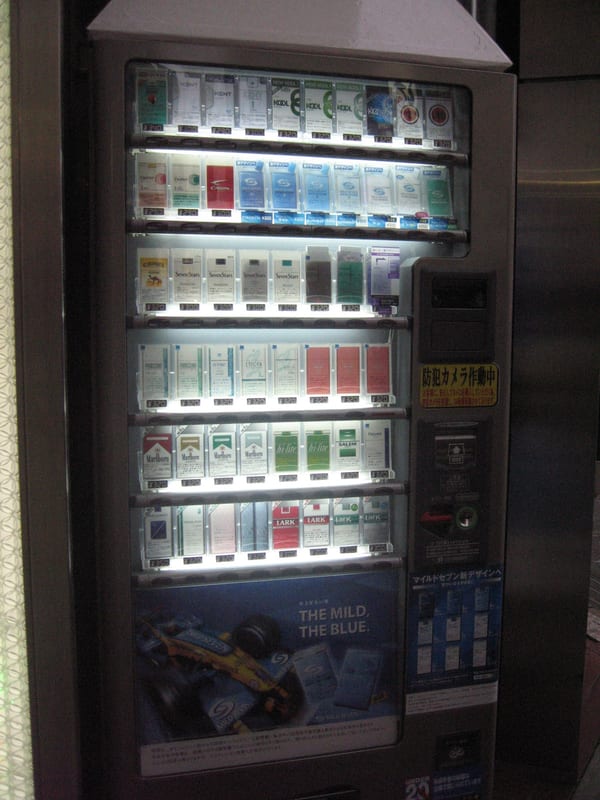
You have to picture that, not so long ago, cigarette and beer vending machines stood on practically every street corner — no ID required to buy from them. It's still hard to believe today: back then, a pack of cigarettes cost around 300 yen in Japan — under 2 euros — when you'd already pay 5 to 6 euros for one in France. The law changed a few years later, and the machines themselves gradually thinned out, right up until smoking on the street was banned outright.
Starting in 2008, a special card — the Taspo — became mandatory to buy cigarettes from vending machines in Japan. More than twenty years after my first summer here, the loop closed in a strange way: the Taspo system shut down for good on March 31, 2026, this very year, its operation having relied on a mobile network that carrier Docomo has now retired. The handful of machines still standing now only read a Japanese driver's license or My Number card — no foreign card anymore, no card at all for a passing visitor.
Takeshita Dori, Gothic Lolita and Gyaru
Back to Takeshita Dori — still heavily packed with a young crowd today — that summer of 2004 remains vivid in my mind. Its gothic lolita and gyaru fashion shops, its idol goods stores, makeup and accessories, and of course its famous crepes.
Gyaru comes from the English "gal" — a style born in the '90s as a rebellion against traditional Japanese beauty standards, bleached hair and bold makeup included. Lolita, despite the name, has nothing to do with Nabokov: it's an aesthetic drawn from Victorian fashion, all lace and doll-like silhouettes, with gothic lolita and sweet lolita as its two best-known variations.
But it's always with a certain nostalgia that I walk these streets again, thinking back to the first time I set foot in what everyone used to call Tokyo's Champs-Élysées. Now overrun by hordes of tourists, it's sometimes hard to picture a time, not so distant, when tourists were actually a minority on this street — when the crowd was mostly kids in uniform and other kinds of rebels, each in their own way.
What's Gone, What's Changed
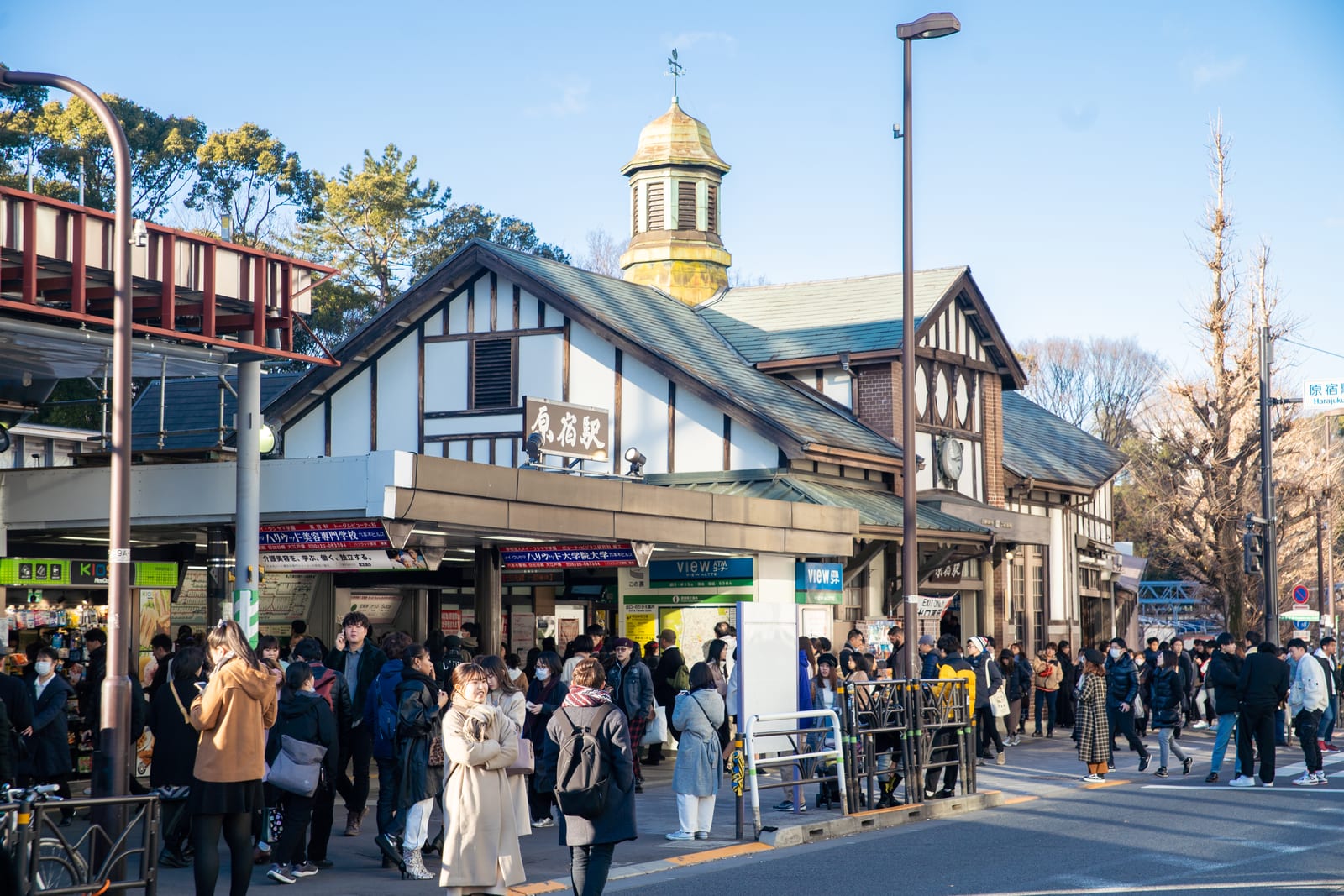
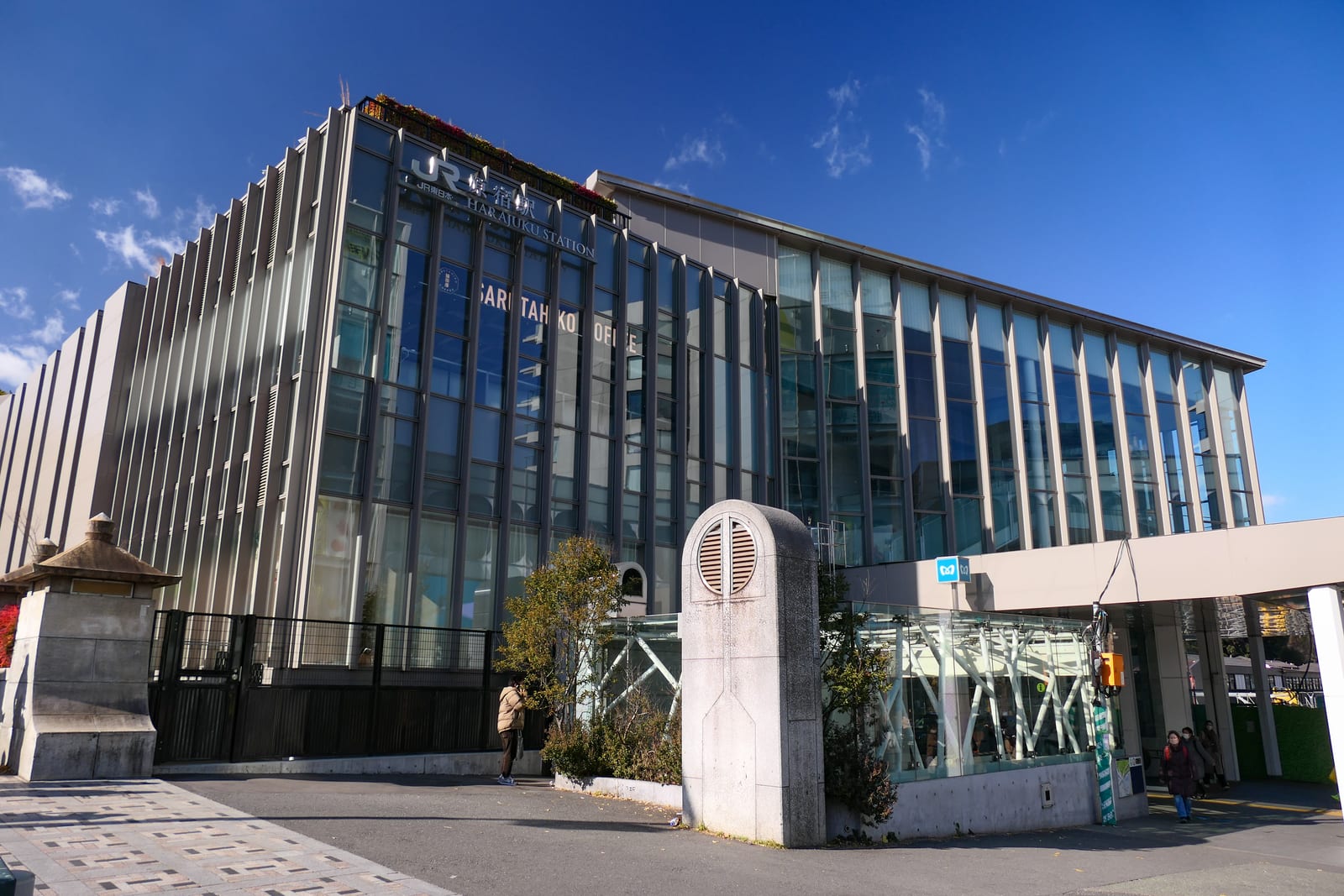
Before the gentrification of the area, before that famous Condomania disappeared. Back then, you reached Shibuya Station by a footbridge crossing over Omotesando, long gone now. And Harajuku Station itself — a wooden building dating back to 1924, the oldest in Tokyo — had a look straight out of another era. Replaced in 2020 by a new building, to keep up with growing crowds — Japanese youth and tourists alike.
Across the intersection, today's Tokyu Plaza, with its kaleidoscope of mirrors at the entrance, opened in 2012. The scenery changes, but the role of the place — a showcase for a Tokyo constantly reinventing itself — stays remarkably the same.
“The scenery changes, but the role of the place — a showcase for a Tokyo constantly reinventing itself — stays remarkably the same.”
Where to Still Find Old Harajuku
Takeshita Dori still holds all its mythic charm — it remains a mandatory stop, but to find something closer to its old-school charm, you have to look a little further:
- Take Cat Street, the lane winding behind Omotesando toward Shibuya — narrower, fewer crowds, more one-person-run shops
- Ura-Harajuku, the maze of small streets between Cat Street and Omotesando, still holds onto the mix that defined the neighborhood back then — fashion, secondhand, independent designers
- RAGTAG Harajuku, on Cat Street, remains the reference for high-end secondhand
- Chicago Jinguumae, the neighborhood's legendary vintage shop, unchanged for decades
- Vintage.Qoo Tokyo, for archival pieces and vintage luxury
- Weekday mornings are still the best time to walk around — the light is different, and so are the streets
The path to the park behind Meiji-Jingumae Station hasn't changed, either — nor has Yoyogi Park, one of Tokyo's three great parks alongside Shinjuku Gyoen. Unlike Harajuku, a neighborhood like Ueno has kept something of that old-world look — but that's a different story, for a future article.
Four bilingual (FR/EN) self-guided itineraries built around Slam Dunk, Hikaru no Go, Your Name & Persona 5 — maps, timing, budgets included.
- Harajuku Then and Now: 20 Years of ChangeNew