Summer 2026 is drawing to a close. Today, rain is pouring hard across the whole Kanto region, as if to warn us the party's over and it's time to get ready for autumn — probably my favourite season in Japan, but that's another story. Summer still feels like a season apart to me, tied to my very first experiences of Japan.
Air Conditioning, Non-Stop
The humidity, the Japanese cicadas (semi, セミ), the fireflies, but above all the matsuri, the fireworks, the yukatas, the rooftop barbecues. In short, everything we love about it. Their deafening drone in the trees is pretty much the soundtrack of July and August here — you'll hear it constantly in the background of Japanese films, anime and manga too. And the heat too — the kind that never lets go and forces you to stay indoors for a good part of the day, air conditioning running full blast, 24 hours a day, seven days a week. I haven't turned the living room unit off since mid-June. Not very eco-friendly, I'll admit, but between that and sweating buckets, the choice makes itself.
When I first arrived in Japan, I was quickly struck by the fact that everything was air-conditioned — apartments, cars obviously, trains, cinemas (where you sometimes need to bring a light sweater), and department stores blasting cold air straight into the street the moment their wide-open doors invite you in to escape the heat outside. That constant hot-cold switch felt pretty strange at first. You get used to it fast, though: the first thing I'd do coming home — or back to my host family's room, in those days — was switch on the AC and jump in the shower for a bit of instant relief.
Matsuri Nights
That said, what a pleasure it is to head out in the heavy evening heat for a festival, to try the local specialities — okonomiyaki, yakisoba, skewered meat — through that string of stalls that all look a little alike but you never get tired of finding again. To feel that warm, family-friendly atmosphere, and let yourself be soaked in that strange nostalgia, hard to describe if you haven't lived it. You don't really understand Japan until you've experienced the rustle of a yukata, the smell of grilled meat, and the kind of heat that makes you savour even the cheapest drink pulled from a bucket of ice, or grabbed at the corner 7-Eleven.
“You don't really understand Japan until you've experienced the rustle of a yukata, the smell of grilled meat, and the kind of heat that makes you savour even the cheapest drink pulled from a bucket of ice.”
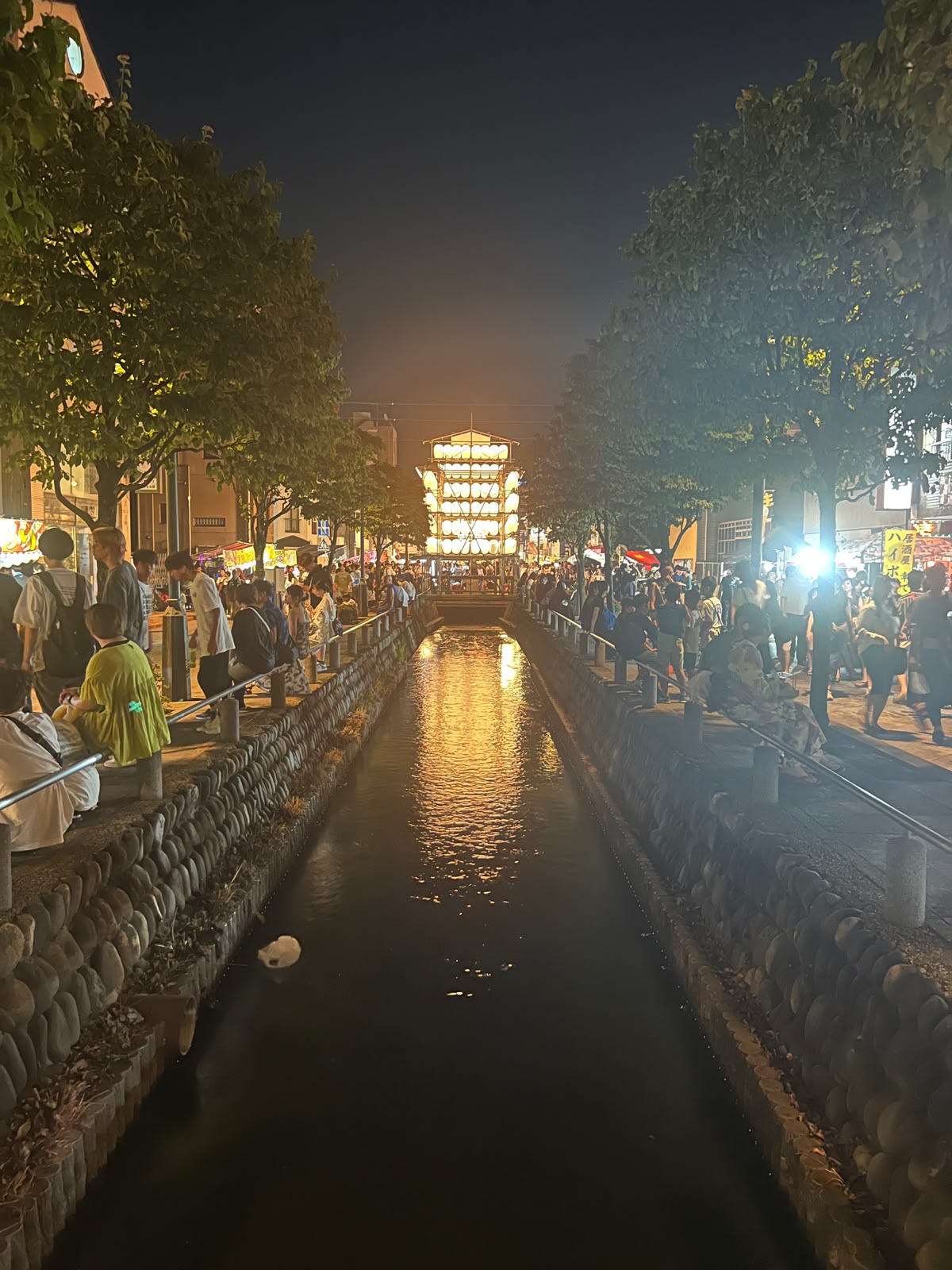
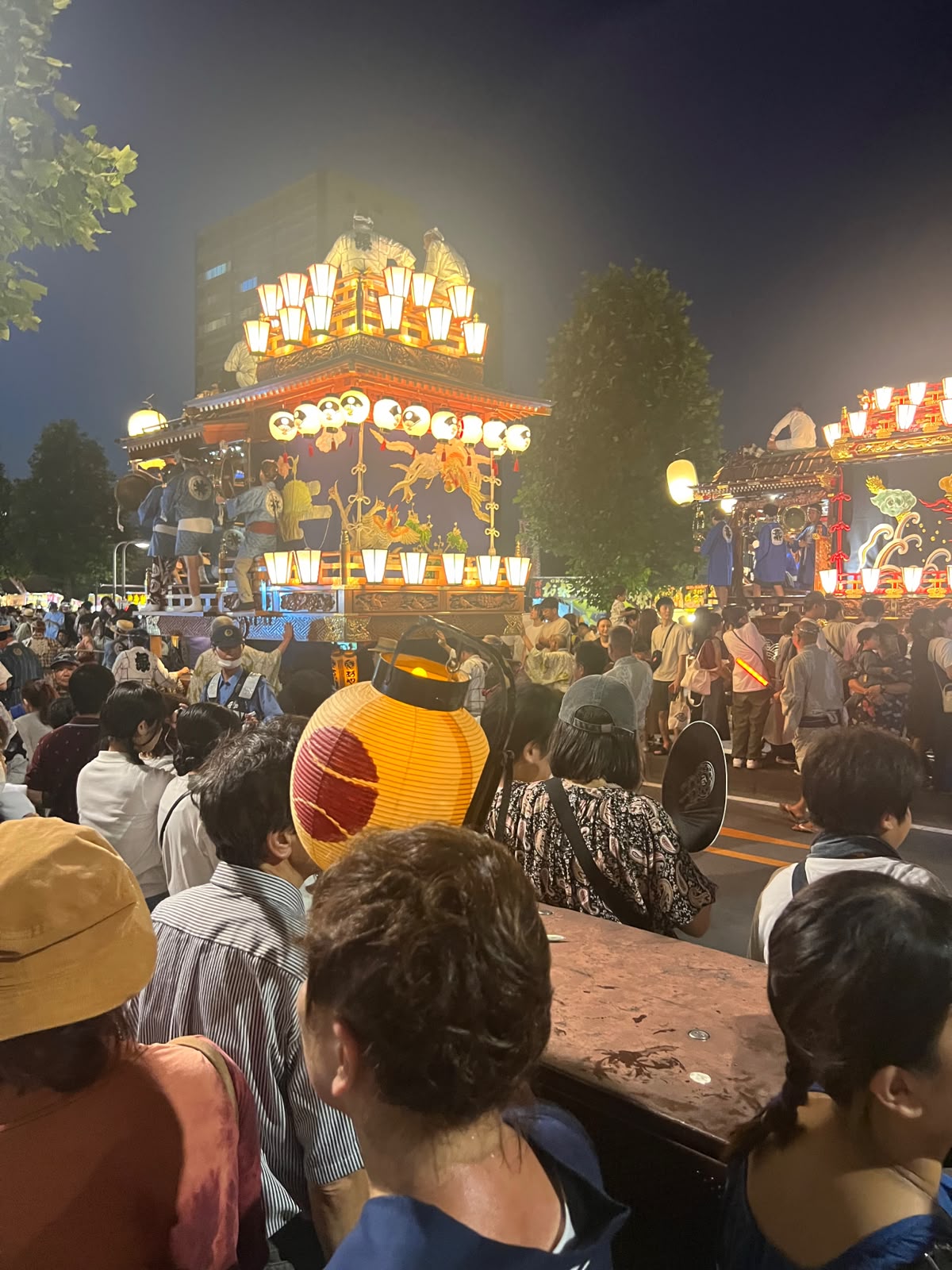
A Summer Full of Fireworks
Unlike France, where fireworks are all concentrated on a single date (July 14th, or the eve of it), Japan sees them all summer long — and they're ranked by power and duration. Some people turn it into something close to a discipline: buying tickets for the best seats, planning food and drinks (often alcoholic), and settling in for ninety minutes, sometimes more, of pure spectacle.
The Chinese may have invented gunpowder, but the Japanese turned it into an art form of its own. At the Katakai festival, in Niigata prefecture, they fire the yonshakudama every year — a shell 1.2 metres in diameter, weighing several hundred kilos, the Guinness World Record holder for the largest fireworks shell, producing an explosion visible across 800 metres. And as is often the case at hanabi shows, every shot is preceded by the announcement of the name of the company or town that sponsored it — a tradition so scrupulously observed that it alone can stretch the show by dozens of minutes.
Summer still holds a place apart in the Japanese imagination — the season of study-filled holidays, since the school year is still only halfway through.
Maybe that's also why this season looms so large in Japanese animation. Cicadas, sun-baked paths, greenery that's almost too green, and that feeling that childhood days will never end keep coming back on screen. My Neighbor Totoro is probably one of the most obvious images of it — for me, at least: it's hard not to think of it once the heat sets in. In the film, of course, nobody spends their time desperately hunting for the nearest air-conditioned konbini. Totoro's fantasy summer has the lightness of childhood; the one I actually live through, meanwhile, mostly has the merit of being real — muggy, noisy, and a lot less restful.
That childhood summer, in Totoro, feels joyful and almost endless. But Japanese summer has another face too, one of memory and of the return of the absent — which is where Obon comes in.
Obon (お盆) generally falls around mid-August, though dates and customs vary by region — some places celebrate it as early as mid-July. According to tradition, it's the time of year when ancestral spirits temporarily return to visit their family. Many Japanese people use the occasion to head back to their hometown or home region, often through some of the year's heaviest travel congestion, on the roads and on the trains alike. Families gather, sometimes visiting graves to clean them and leave offerings — and it's also the period when bon-odori are held, folk dances put on all over the country, in village squares or neighbourhood parking lots, to the sound of taiko drums.
What strikes me about Obon is the contrast: at the very moment you're passing kids in yukata in front of yakisoba stands, tradition also has it that the family's dead return, for a few days, to sit at the same table. That quiet presence of the absent gives Japanese summer a slightly different colour — joyful, family-oriented, and strangely nostalgic, all at once.
So if the heat doesn't scare you off too much, I can only encourage you to discover Japan in summer — a season with a far worse reputation than it deserves.
A Few Practical Pointers
- The Sumidagawa Hanabi Taikai (Tokyo, Asakusa) is an absolute classic — around 20,000 shells fired from two points along the river. Always the last Saturday of July; in 2027 that should fall on July 31st, though the official date is only confirmed by organisers in April.
- For a display on a completely different scale, the Katakai festival (Niigata) and its yonshakudama are worth the trip if you're in the region at the right time — but seats need to be booked well in advance.
- The "Big Three" hanabi (Nagaoka, Omagari, Tsuchiura) don't have a fixed 2027 date yet at the time of writing — worth watching from next spring if you're already planning a trip around them.
- Hanabi shows stay at the mercy of the weather — light drizzle usually doesn't change the programme, but a heavy storm can push a show back (rarely cancel it outright). Many festivals actually schedule a backup date for the next day or the following weekend — check the event's official site on the day itself if in doubt.
- For music fans, Japanese summer has its own big dates too — Fuji Rock and Summer Sonic, two of the genre's biggest names in Japan.
Gearing Up for Summer
We've put together a useful selection if you want to be as ready as possible to face Japan's humid summer heat and dress right for a hanabi or a matsuri.


Four bilingual (FR/EN) self-guided itineraries built around Slam Dunk, Hikaru no Go, Your Name & Persona 5 — maps, timing, budgets included.
- The Sword and the Tea Whisk
- The Manga Was Right About This Place
- Lost in Kabukicho
- Shout, Laugh, Stay Silent
- 10¹⁷⁰ Possibilities, One Path
- The Summer That Sticks to Your Skin
- When Japan Exhales